Okay, so check this out—I’ve been messing with hardware wallets for years and card-style devices keep pulling me back. Wow! They fit in a wallet like a credit card, they tap to a phone, and somehow that simple form factor changes your behavior. Initially I thought smaller devices would feel gimmicky, but then realized they actually lower the friction to use crypto day-to-day. On one hand that convenience is brilliant; though actually it raises questions about where convenience ends and risk begins.

Whoa! The first time I tapped a crypto card to my phone I felt oddly normal about it. My instinct said this is how wallets should work—intuitive, quick, and almost invisible in everyday life. Hmm… I remember fumbling with seed phrases and paper backups, and that memory makes me biased toward anything that removes that pain. Here’s the thing. Somethin’ about a card that feels like plastic but holds private keys is oddly reassuring and a little wild at the same time.

Seriously? The tech behind near-field communication (NFC) is not new, but applying it to private key storage is neat. Medium-length explanation: NFC enables the card to communicate with a smartphone without a battery, which means the card can stay thin and passive yet still sign transactions. Longer thought: because the private key never leaves the secure element inside the card, you get a separation of signing capability from the internet-connected device, which reduces exposure even when your phone is compromised.

I’ll be honest—I still test things in the real world. Wow! I dropped a card (accidentally), swiped it near a subway turnstile by mistake, and had to laugh. That little incident made me rethink durability and real-world ergonomics, not just abstract security models. On one side, the cards survive being carried and handled; on the other, they can be mislaid like any other card, so you need a backup plan that you actually use.

Initially I thought recovery would be the most confusing part, but actually the experience is simpler with a good design. Hmm… good apps guide you through creating a backup and associating it with the plastic card without forcing you to scribble seeds on paper. My working approach: pair the card to a smartphone app, test a small transaction, then set up a secure recovery method. There’s a tension though—ease of backup versus the risk of storing a recovery in a cloud or phone; on balance I avoid cloud secrets unless encrypted end-to-end and under my own control.
A slim NFC crypto card held between fingers, matte finish, showing subtle chip outline

How I use a card wallet day-to-day (and why I trust tangem)

I’m biased, but for commuting and quick payments a tap-to-sign card beats carrying a bulky device. Really? The card sits in my wallet next to my driver’s license and it feels natural. On longer, more complex transactions I bring out a laptop and use other tools, though for everyday sends the card is plenty. Check this link if you want to see the exact card I recommend: tangem.

Hmm… Something felt off about some early card wallets—setup was clunky, the apps were slow, and the UX assumed you were already an expert. Wow! Designs have improved a lot. The latest iteration focuses on clear prompts, transaction previews, and a minimal attack surface. Longer thought: when the firmware and app minimize data exposure and provide verifiable signatures, you move from trusting a vendor to being able to audit or at least validate behavior in practice.

Here’s what bugs me about bad wallet implementations: they fetishize specs while ignoring human behavior. Really? People lose things, forget PINs, and reuse passwords; a technically secure device that fails in the human layer is practically insecure. My instinct said a tool must be designed around recovery-first thinking—because if users can’t reasonably recover, they’ll take unsafe shortcuts. On the pragmatic side, multiple physical backups and a tested recovery workflow solve most of these problems.

On one hand, the elegance of a card is its simplicity. On the other hand, complexity lurks in integrations and ecosystems. Wow! When you pair a card with mobile apps, hardware wallets, or custodial services, the threat model expands. Longer thought: you have to map each interaction—what signs the phone displays, what data the card signs, who can relay a transaction—because security is the product of procedures, interfaces, and assumptions, not just silicon.

Honestly, I like cards for gifting or onboarding newbies. Hmm… People who are new to crypto often freeze when shown long mnemonic phrases, but they understand a card in a wallet. The tactile experience lowers intimidation, which helps adoption. I’m not 100% sure it scales for power users who need multisig, but for single-signature everyday use it’s compelling. Also, tangibility encourages people to treat keys like something they own physically, which changes behavior very quickly—sometimes for the better, sometimes not.

Initially I thought the market would split between ‘bank-grade’ hardware devices and these casual cards, but actually there’s overlap. Wow! Serious users can layer card wallets into a larger setup—use cards for small, routine spending and a secure multisig setup for larger holdings. On a local scale—think Main Street coffee runs—the card lets you sign small transactions without booting a desktop or handling seed phrases. There’s a trade-off in convenience and absolute security, and choosing a threshold for exposure is a personal decision.

Here’s a small checklist I use before trusting a card wallet with assets: Wow! Verify the manufacturer and firmware signing process; check whether the app shows full transaction details; test recovery flow; and store a backup in a separate, secure place. Medium detail: run a small transfer first, wait for confirmations, and only later move larger sums. Longer thought: if any step feels opaque or the app requests more permissions than needed, that’s a red flag—stop, research, and only proceed when you’re comfortable with the model.

Frequently Asked Questions

Is a card wallet as secure as a traditional hardware wallet?

Short answer: it depends. Wow! Cards can be very secure when built with a certified secure element and strong firmware signing. My take: for daily, low-to-medium value activity they’re excellent. For high-value storage, consider layered defenses—multisig or air-gapped cold storage—because absolute security requires diversity of controls and backups.

What happens if I lose my card?

First, don’t panic. Really? If you’ve set up a proper recovery (and tested it) you can restore access. If not, loss can be permanent; that’s why a recovery plan is non-negotiable. Tip: treat the card like cash and have a tested, offline recovery stored in a different physical location.


So I was fiddling with a USB hub and my Trezor the other day. Whoa! The setup felt familiar, yet there were little things that kept nagging at me. Initially I thought the desktop app was just a prettier interface, but then I realized it actually changes how you think about threat models. On one hand the hardware does the heavy lifting; though actually the software both unlocks and exposes different risks depending on how you run it.

Okay, so check this out—if you treat your seed like a spare key in a sock drawer, you’re asking for trouble. Seriously? Yep. My instinct said “change that habit” the first time I saw someone store a photo of their recovery phrase in cloud storage. Later I ran some sanity checks and realized many users conflate convenience with security, and that’s exactly where mistakes happen. I’m biased toward doing the slightly annoying thing right away to avoid drama later.

Here’s the short, practical truth. Use a dedicated desktop for wallet interactions when possible. Hmm… not everyone can, and that’s fine, but segmenting daily browsing from crypto operations reduces risk a lot. Initially I thought mobile wallets were good enough; but after seeing phishing webs and browser extension screw-ups, I changed my mind. Actually, wait—let me rephrase that: mobile is okay for small amounts, but for larger holdings I prefer a well-configured desktop environment paired with a hardware wallet.

Install the official client. Whoa! That sentence sounds basic, and it is. But verifying the download matters. On desktop you can check signatures and checksums, or use the official installer from the vendor to avoid web-based tampering. If you use the wrong binary, your device could still be physically secure yet functionally compromised—yeah, that possibility exists and people underestimate it.

Trezor device resting beside a laptop, showing Trezor Suite on screen

Why Trezor Suite (and where to get it)

When I first tried the trezor suite desktop client, something felt calmer about the whole experience. Really. The interface collects firmware updates, transaction signing previews, and portfolio views in one place, which cuts down on accidental mistakes. On the other hand forcing everything through one app increases the stakes for that app being secure, so you do want to validate it before trusting it fully. My recommendation: download only from the official source linked above, verify, and then set up in a clean environment if you can.

Let’s talk firmware for a sec. Whoa! Firmware updates are necessary, but they need care. If you accept an update over a dodgy network or after clicking a phishing prompt, you could be nudged into a bad state. On the flip side, skipping updates leaves you vulnerable to known exploits, so balance matters. I usually update on a network I trust and double-check the device’s confirmation screens—those tiny details matter very very much.

Seed phrases still rule. Wow! That sentence is short but true. Your recovery seed is the single point of failure and the single point of recovery. Initially I stored mine on paper, then moved to stainless steel after a near-water incident (oh, and by the way—paper in a safe is fine, but I sleep better knowing the seed is engraved). If you choose steel storage, practice the restore process before you put the seed away for real.

Segmentation techniques work. Hmm… for example, use a non-administrative account for daily use. This limits what malware can do if it gains access. On one hand this feels like overkill; though actually, it’s low effort versus high payoff. My practical setup: a small, inexpensive laptop for crypto tasks, kept offline when not in use, with only the necessary software installed.

Watch out for social engineering. Whoa! Scammers are good. They mimic support, create fake firmware pages, and even call you pretending to be recovery specialists. Something felt off the first time someone asked for a “verification code” that was actually my recovery for help. My rule: never give your seed or any private key material to anyone, no matter how convincing they sound. If support asks for more than transaction IDs or device model numbers, back away slowly.

Multisig alters the landscape. Okay—this is one of those deeper shifts that changed my trust model. Multisig spreads risk across devices or custodians, which means a single compromised machine or key no longer ruins everything. Initially I thought multisig was only for big players, but now I see it as a practical tool for individuals who want better resilience. Implementing multisig is slightly more involved, and that complexity is why many people avoid it, though it’s worth considering.

Backup strategy: test restores. Whoa! Again a short punch. People back up once and forget it. That’s the dangerous part. I once recovered a wallet only to find a typo in my written notes—ugh—so I now practice restoring from a backup at least once. Practice forces you to discover missing words, bad handwriting, or ambiguous characters before it’s an emergency. Seriously, do the rehearsal; it saves panic later.

On privacy: desktop clients reveal metadata. Hmm… transaction graphs, IP addresses used during broadcasts, and portfolio snapshots can leak to observers. Initially I didn’t think about network-level privacy, but after using Tor and VPNs to broadcast transactions, I noticed reduced dusting attempts. On the other hand, routing everything through Tor can be slower and a bit fiddly, so you balance privacy and convenience based on threat model. If privacy matters to you, learn what your wallet broadcasts and how to mask it.

Device hygiene—small steps, big effect. Whoa! Cleaning up browser extensions, avoiding random USB sticks, and enabling passphrase options can dramatically improve outcomes. I nearly plugged a “promotional” drive into my workstation once—bad idea. Now I treat any external media as suspect and scan on isolated systems. I’m not 100% paranoid; just cautious where it counts.

FAQ

Do I need Trezor Suite, or can I use web wallets?

Use the official desktop client for sensitive operations. Web wallets are convenient but expand the attack surface, especially via browser extensions or compromised pages. If you must use a web interface, pair it with a hardware wallet and minimize exposure by keeping the device firmware and client validated.

How should I store my recovery seed?

Steel backups are durable and weatherproof, but paper in a fireproof safe is acceptable for many people. Whatever you choose, practice restores and consider geographic diversification for very large holdings. Don’t photograph or digitally store the seed—ever.

What about firmware updates?

Apply updates from the official desktop client, verify signatures if you can, and only update on a trusted network. If an update looks suspicious, pause. It’s fine to ask the vendor or community before proceeding.

Whoa! I remember the first time I chased a rug pull at 3 a.m. — heart racing, charts blurry. Something felt off about the token’s liquidity movements. My instinct said “watch the pool,” but the UI I had was laggy and clunky. Seriously? That’s how you lose money. Here’s the thing. You need tools that move as fast as the market and show the right signals without burying you in noise.

Okay, so check this out—I’ve been digging into decentralized exchange analytics for years, and I’ve landed on a few nonnegotiables: real‑time swap feeds, clear liquidity snapshots, easily filterable token lists, and quick alerts tied to on‑chain events. I tried a lot of dashboards that promised “real‑time” but were functionally delayed by a minute or more; in crypto, that’s an eternity. Initially I thought that speed alone would be enough, but then I realized context matters more—volume spikes mean squat unless you can see liquidity changes and the counterparty behavior behind them. On one hand, a sudden buy pump looks exciting; though actually, without understanding whether a whale is adding or removing LP, it’s a guessing game.

So let me walk you through how I use a platform like dexscreener day-to-day, what it does well, where it still trips up, and practical routines that help you survive and thrive on AMMs. Hmm… I’m biased, but experience matters here—I’ve lost money, learned fast, and built heuristics that often save time (and capital).

Screenshot-style illustrated view of token swap feeds and liquidity depth

Speed, Signals, and the “Why” Behind Moves

Real quick: speed is table stakes. If your tool updates every 30 seconds, you’re toast. Medium latency used to be tolerable, but not anymore. Fast updates mean you see swaps and liquidity shifts as they happen. My working method pairs three views: the trade feed, the liquidity chart, and the holder or contract flow (when available). The feeds give you raw action. The liquidity chart tells the story behind price moves. And contract flows reveal whether this is organic interest or coordinated activity.

For example, I watch for a pattern—small buys trickling in, then a single large liquidity removal followed by a dump. That pattern usually signals extraction. Initially I assumed small buys implied retail hype. Actually, wait—sometimes those small buys are synthetic, placed to entice bots and algos. On one hand it’s deceptive; on the other, it’s exploitable if you have limits and stop protocols. My instinct said “avoid” but after studying setups for months, I learned to size positions and plan exits in advance.

Another feature I can’t live without is an instantly accessible token health snapshot: LP ownership, rug check markers, token contract verification, and admin privileges. These aren’t foolproof, but they let you triage opportunities—high frequency of token contract renounces, balanced LP ownership, and on‑chain verified source code reduce risk. This part bugs me when dashboards hide the essentials behind tabs or add delays in fetching contract data. Speed + clarity beats bells and whistles.

Here’s a quick trader rule I use. Short sentence. Scan new tokens for three red flags: concentrated LP, transfer limits or taxes in contract code, and recent ownership transfers. If two of the three are present, I skip. If none are present, I still size down. This is not perfect. I’m not 100% sure it catches everything. But it often keeps me out of the obvious traps.

There are things these platforms do well. They aggregate DEX pairs across chains, show tick‑by‑tick swaps, surface newly listed tokens, and often include alerting and watchlists. The UX for getting alerts to your phone or Telegram matters. You want quiet unless something meaningful happens. Too many alerts equals alert fatigue; zero customization equals missed moves. Balance is key.

How I Set Up a Watchlist and Alerts

First, pick a theme. Reload yourself: memecoins, infra tokens, staking plays—each needs different thresholds. Then set filters: minimum liquidity (I use a sliding threshold depending on chain: higher on BSC, lower on testnets), minimum price movement to trigger, and whether to show pairs with verified contracts only. I like a mix of automated filters and manual curation. My gut—yep, that fast thinking—often spots something automated filters miss, like a token with an unusual name pattern or an identical contract reused across launches.

Next: alerts. I set buy/large‑sell alerts, liquidity removal alerts, and new‑pair listings in the pools I track. When an alert fires, I have a checklist: check LP ownership, review recent transactions, size risk, and place limit orders with pre‑defined stop points. That checklist is simple. It keeps me from overreacting. On one night I ignored the checklist and paid for it. Trust me—rules save you somethin’.

There are tradeoffs. Alerts come with false positives. Liquidity can be added and removed as part of legitimate rebalancing, or a new market maker stepping in. Working through those contradictions is part of the craft: on one hand you need to be paranoid; on the other, you can’t sit on the sidelines forever. So I calibrated my thresholds over months: reduce noise, keep the important blips.

Another practical tip: pair the dashboard with a simple local spreadsheet or a notes app. Track why you entered, exit plan, and the result. Honestly, journaling trades turned my performance around more than any algorithm. It’s boring work. But it forces you to see patterns, and patterns are where the edge is.

Where These Tools Still Fall Short

I’ll be honest—there are gaps. Cross‑chain correlation remains messy, especially for fast bridges. Flash loans and opaque MEV tactics can alter feeds faster than some UIs can represent them. Some dashboards still lean heavily on visual appeal over actionable clarity, which bugs me. I like clean, predictable displays instead of glossy charts with too many overlays.

Also, on smaller chains, node reliability and RPC latency hurt data fidelity. If your data source misses a block or returns stale state, your “real‑time” signal is compromised. So I always cross‑validate when things look odd—check mempool explorers, verify contract events, and if possible, use another feed. Redundancy isn’t sexy, but it keeps you honest.

Lastly, access control and privacy matter. If you link wallets or run trades directly through the dashboard, be sure the platform’s auth model is understood. Permission creep is real—read those prompt screens. It’s easy to rush a transaction and grant allowances you didn’t mean to. My rule: minimal approvals and revoke after the trade if you can.

FAQ

How do I avoid scams when using DEX analytics?

Start with contract verification and LP ownership checks. Look for renounced ownership, reasonable tokenomics (no crazy initial supply shenanigans), and healthy liquidity depth relative to the trade sizes you plan. Set strict alert thresholds, size positions small on new listings, and journal every trade. Also, don’t trust a single data source—cross‑check on‑chain events when you spot weird activity.

Wrapping this up without being tidy—because neat summaries feel unnatural here—my main point is simple: you don’t just need a pretty chart. You need context, speed, and sensible alerts that map to a risk plan. Use tools that give you that, treat them like copilots, not autopilots, and keep learning. Funny thing: after a few rough nights, doing the boring checklist made me sleep better. Really. That peace is worth trading up for.

Whoa! Okay, so here’s the thing. I used to juggle three different browser wallets whenever I wanted to move assets across Ethereum and other EVM chains, and that was a mess. Seriously, it felt like constantly switching tabs in my head—one for token swaps, one for approvals, one for tracking tx status. My instinct said there had to be a cleaner way, and after a few false starts I landed on a multi‑chain browser extension that actually reduced friction without sacrificing safety.

At first I thought all extensions were basically the same. But then I realized the differences are mostly in the details: how they handle approvals, whether they support hardware wallets, how clear they make gas fees, and whether they give you transaction context. Initially I assumed more features meant more risk, but actually, the right features can reduce mistakes—if they’re implemented thoughtfully. Hmm… this part bugs me: too many wallets show a popup that says “approve” and you click it reflexively. You can’t be reflexive here.

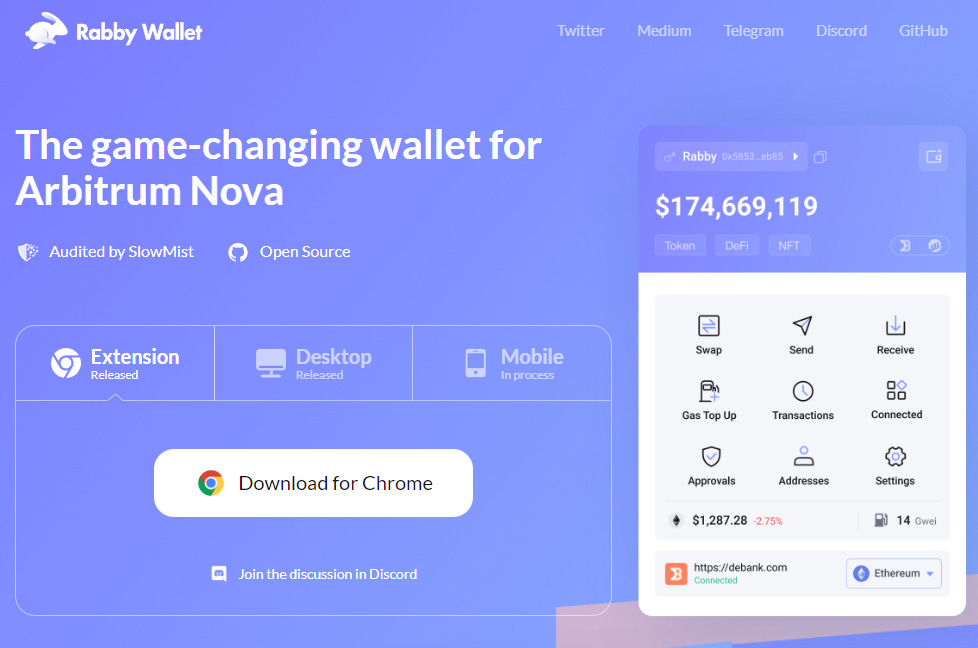
Let me be honest—I’m biased toward tools that make DeFi less fragile for regular users. I’m not a maximalist for any single app, though. I value clear UX, strong permission controls, and good multi‑chain support. Rabby, for example, threads a lot of these needles well. If you want to grab it, here’s a solid source: rabby. There, I said it.

Screenshot of a multi-chain wallet extension showing accounts and network list

What I care about in a browser wallet

Short list: safety, clarity, and speed. And not in that order. Safety first, yes, but if the wallet is so clunky you make dumb mistakes, safety loses. Clarity means you can see exactly what permissions a dApp requests and what a transaction will do. Speed means signing flows that don’t make you wait forever—important when gas spikes and you need to adjust gas price fast.

On one hand, some wallets are minimalist—very pretty, very simple—but they hide key info. On the other hand, some are feature heavy and feel like control panels. I like a middle ground. For example: transaction simulation or readable summaries for contract interactions are lifesavers. They give context so you don’t approve a 0/0 allowance or accidentally approve a contract to drain funds. On another note, hardware wallet support is non‑negotiable for me; I want cold keys for meaningful balances.

Okay, so check this out—Rabby feels like it was built for people who do DeFi a lot but don’t want to be power‑users of cryptography. It supports multiple EVM chains, has a clearer approvals interface, and integrates with hardware wallets. These aren’t buzzwords; they map to fewer accidental approvals, and fewer frantic Twitter threads about stolen funds. I’m not 100% sure about every integration, but in my testing the day‑to‑day felt calmer.

Real‑world workflows and how a multi‑chain wallet helps

I’ll share a typical flow. You open a dApp on Ethereum mainnet to swap tokens. The dApp asks for a signature. The wallet shows the call data, the contract address, and the exact approval being requested. You pause. You think. You can cancel if it looks off. With a wallet that hides that information, you’d just click through. So—this is why transaction context matters.

Then there’s bridging. Crossing chains used to be two or three separate, error‑prone steps. With one extension that manages multiple networks, you can keep the same account identity across chains (when it’s appropriate), which reduces mistakes and confusion. That said, bridging is still risky. Bridges introduce their own attack surface. But a multi‑chain wallet reduces UI risk: you know which chain you’re operating on, and you don’t accidentally send funds to the wrong network address.

Another common task: interacting with a new contract. A good wallet will show contract source verification, or at least provide readable call summaries—not just a hex blob. This makes it easier to spot nonsense approvals. It’s a small thing, but trust me, it saves time and grief. Somethin’ as small as a descriptive label in the popup can change behavior.

Security tradeoffs (and pragmatic tips)

On paper, browser extensions expand attack surface—true. But in practice you can manage risk. Use hardware wallets for significant holdings. Create separate accounts for yield farming versus everyday swaps. Keep a tiny hot wallet for low‑value interactions and a cold wallet for larger positions. These are basic compartmentalization patterns, and they work.

Another tip: lock down your wallet settings. Disable auto‑connect where possible, review site permissions, and clear stale approvals regularly. Some wallets now show a list of active dApp approvals and allow quick revocation—use it. If you see an approval for unlimited token allowance, revoke or set a specific limit. These mechanics often separate a squeaky clean account from a compromised one.

One more thing—watch transaction fees closely. A wallet that surfaces realistic gas estimates, lets you choose between speed tiers, and warns about low‑priority gas can save you money. Also, check for features that let you replace or cancel transactions (nonce management). These are real productivity boosts when markets move fast.

FAQ

Is a browser extension wallet safe enough for serious DeFi?

Short answer: yes, if you adopt good practices. Use hardware wallets for large balances, keep software up to date, and audit the permissions you grant to dApps. A browser extension is convenient and, when combined with careful workflows and hardware signing, is a practical option for many users.

Does multi‑chain mean one private key for all chains?

Typically, yes—most multi‑chain EVM wallets use the same seed to derive addresses across EVM chains. That’s convenient but also means compartmentalization must be handled at the account level (create separate seed phrases/accounts for critical isolation). If you want total separation, use separate wallets or hardware devices.

How do I trust a wallet like Rabby?

Trust comes from a combination of transparency, known audits, community signals, and your own testing. Try small transactions first. Read documentation. Check for security audits and verify the extension source. Over time, you’ll build confidence. I’m not saying there aren’t risks—every app has them—but cautious, incremental use reduces exposure.

Okay, so check this out—privacy is messier than the gloss makes it sound. My first glance at CoinJoin felt like a light switch: suddenly, txs could blend together and privacy seemed solved. Initially I thought it was nearly bulletproof, but then reality nudged in. On one hand it’s a clever coordination trick; on the other hand heuristics and chain analysis keep getting smarter. Wow!

CoinJoin is simple in idea but complex in practice. At its core it means many users cooperate to create a single on-chain transaction that mixes outputs, so tracing which input maps to which output becomes uncertain. That uncertainty isn’t magic though; it’s probabilistic and depends on design choices, network conditions, participation, and the observers’ toolset. My instinct said “great” at first, but then I started poking at assumptions. Seriously?

Consider typical deanonymization paths. Analysts look for linking behaviors: reuse of addresses, timing patterns, atypical change outputs, and on-chain footprints that break the symmetry CoinJoin attempts to create. These are not secret tricks; they’re just inference methods, and they improve over time. Initially I thought the privacy gains were durable, but then I realized they erode if users behave predictably or the mixing set is small.

Whoa! That sentence felt dramatic, but it needed that. For folks who care about privacy, this matters because the adversary doesn’t have to be omnipotent to make meaningful inferences. Over weeks and months chain analysis companies refine models. On top of that, legal risks and compliance norms in various countries complicate real-world use cases. Hmm… somethin’ about that always bugs me.

Let’s talk about Wasabi for a minute (not a deep dive, just perspective). As a wallet that popularized a particular CoinJoin approach, it changed the usability baseline for privacy wallets in Bitcoin. It bundles users in shared transactions, integrates fee coordination, and uses zero-linking design elements to reduce metadata leakage. I’m biased, but the UX trade-off was mostly worth it—at least for people who are careful. Really?

Diagram showing many bitcoin inputs converging into a single CoinJoin transaction with mixed outputs

Why CoinJoin helps, and where it falls short

CoinJoin helps by creating anonymity sets where multiple coins are indistinguishable at a glance. That anonymity set is only as strong as its weakest link, so users who reuse addresses, consolidate mixed and unmixed funds, or withdraw at predictable times can undermine the whole set. On one hand the math gives you plausible deniability; on the other hand real-world behavior leaks. Initially I thought more participation would trivially fix things, but in practice incentives, fees, and UX friction limit perfect mixing.

There are also metadata streams beyond the blockchain. Network-level observers, custodial services, or exchanges may correlate on-chain patterns with off-chain identities. That doesn’t mean CoinJoin is useless. Far from it. It raises the bar and forces mass surveillance to work harder. But it’s not a silver bullet, and sometimes pundits overpromise. I’m not 100% sure about future legal landscapes, though—it could shift unexpectedly.

wasabi made CoinJoin accessible, and that mattered because adoption is partly a product problem. Tools need to be usable for privacy to scale. Wasabi also prompted conversations about centralized coordination, censorship resistance, and how privacy tooling monetizes safety. Those debates are healthy, even if they get loud and messy.

People ask if CoinJoin makes you “anonymous.” The honest answer is: it increases privacy, sometimes dramatically, and sometimes only a little. It depends on your threat model, how many rounds you do, whether you mix with fresh coins, and whether your other online behavior leaks identity. I used to say “mix and forget” but actually, wait—let me rephrase that—privacy is ongoing work, not a one-off task.

On legal and ethical lines: coin-mixing attracts scrutiny because it’s useful to bad actors too. That risk changes how services, banks, and exchanges treat mixed coins. Some places flag them, others don’t. So there’s friction and potential account freezes or extra KYC asks. That doesn’t mean privacy-seeking is illegitimate (far from it), but you should expect friction. This part bugs me in a political way, honestly.

There are practical trade-offs worth watching. Higher privacy often means slower liquidity, higher fees, and more operational complexity. For example, coordinating many participants takes time. Wallets try to hide that complexity, which is good, but abstraction can hide dangerous defaults too. I’m biased toward tools that are transparent about their trade-offs.

Community norms also matter. If everyone regularly used CoinJoin-like tech, the stigma and the detection signals would shrink. But we live in an ecosystem of uneven privacy hygiene. People mix, then re-link their funds by consolidating, or they cash out to KYC rails in predictable ways. Those behaviors keep analysts alive with signals. Wow!

So what should privacy-minded users actually think about? First, set a realistic threat model. Are you avoiding casual surveillance, targeted nation-states, or corporate analysis firms? Different adversaries require different tactics. Second, practice good on-chain hygiene: avoid address reuse, separate spending pools mentally, and treat mixed funds differently. I’m not a saint here—I’ve made mistakes too, and that keeps me humble.

Third, diversify tools and habits. Relying on a single tool or single session of mixing is fragile. Use multiple privacy layers (e.g., on-chain privacy combined with off-chain operational security). That last part is ambiguous by intent; I won’t give operational playbooks, but think of privacy as layers rather than one magic fix. Seriously?

FAQ

Is CoinJoin illegal?

Generally, CoinJoin itself is not illegal in most jurisdictions; it’s a technique to increase transaction privacy. Laws change, and financial institutions may treat mixed funds as higher-risk. So legality is context-dependent and shaped by local regulation and specific use.

Will CoinJoin make me perfectly anonymous?

No. It raises the difficulty for observers and can significantly improve privacy, but it doesn’t guarantee perfect anonymity. Other behaviors (address reuse, timing leaks, off-chain identity links) can undo gains. Think probabilistically, not absolutely.

Should I use a privacy wallet?

If you care about surveillance resistance and can accept trade-offs like fees and extra steps, a privacy-focused wallet is worth exploring. Learn the limits, keep expectations modest, and consider operational security beyond the wallet itself.

Okay—wrapping up in a non-clickbaity way: privacy in Bitcoin is an arms race. Tools like CoinJoin and wallets such as wasabi tilt the game toward users, but they do not end the game. On one hand I feel optimistic because the space innovates fast; on the other hand I’m cautious because human patterns are predictable and that predictability leaks. So yeah, be thoughtful, stay curious, and don’t assume one tool makes you invincible. Hmm… that’s where I land today, but this feels like an ongoing conversation.